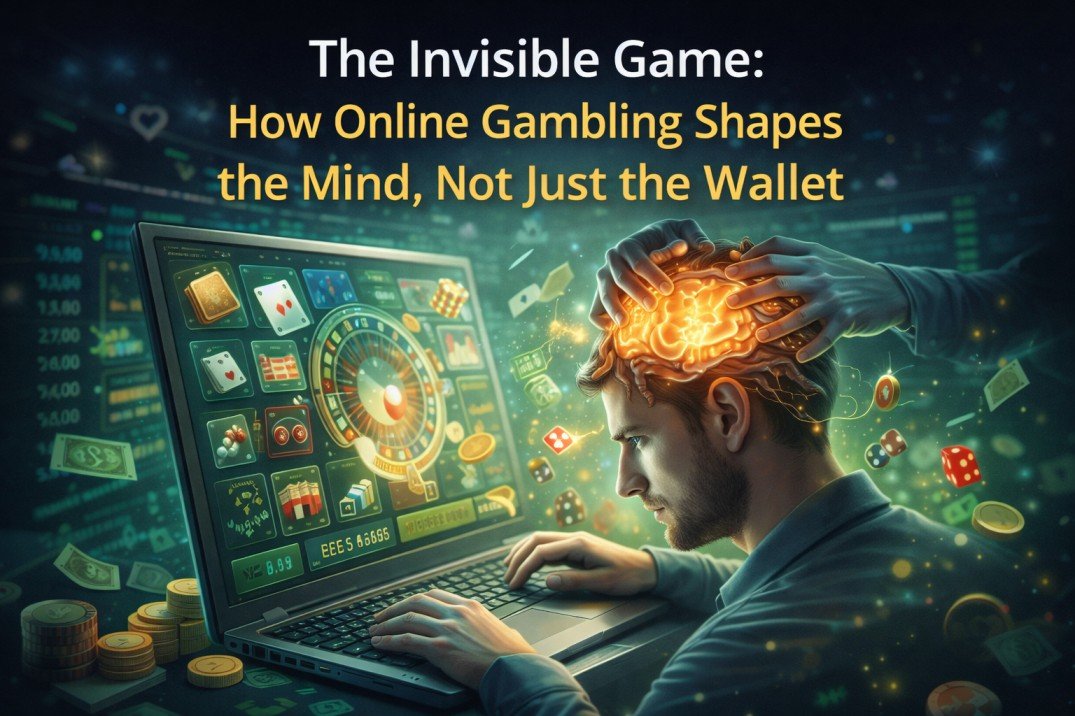
Gamblers enjoy words such as “the system is rigged,” “the odds are fixed,” and “the casino wants you to lose.” While the mathematical edge exists, here’s a more painful truth:
Online gambling sites do not need to falsify the results. They manipulate you.
RNG systems are tightly regulated, so they do not cheat the game logic, but rather learn everything about your reactions to wins, losses, pauses, hesitation, boredom, and aggravation.
Every click, hover, deposit, and stall before pushing “spin” contributes to behavioural prediction models. This is not a conspiracy; rather, it is modern UX optimisation.
Platforms monitor things such as:
- When you tend to pursue losses.
- How long do you play before switching games?
- Which bet size makes you feel “safe”?
- When you retire after winning?
- Which bonuses trigger your return?
This data does not affect the game’s outcome, but it does modify how the platform interacts with you, generating a mirror of your emotional tendencies.
It’s like playing poker against someone who knows your heartbeat.
The Myth of Control: Why Loss Feels Like Progress?
One of the oddest psychological repercussions of online gambling is that losing might feel more meaningful than winning.
People who have never gambled assume that the thrill comes from the jackpot. Real gamblers understand that the pleasure stems from the almost.
- The reel stops one symbol away.
- The free spin suggests another retrigger.
- The parlay loses by one point.
- The roulette ball moves around your number before jumping out.
This isn’t luck. “Near-miss reinforcement” is a brain glitch in which an objectively poor outcome yet activates reward circuits.
Online platforms take it a step further. Algorithms are designed to offer animations, aural cues, and pace that widen the emotional gap between losing and nearly winning. Over time, gamblers begin to subconsciously believe: “I’m getting closer.”
But gambling has no memory. There is no “closer.” There is just randomness.
However, the feeling is strong enough to cause the brain to interpret loss as development.
It’s the most beautiful, horrible illusion ever created.
Why Does Online Gambling Feel More “Personal” Than Casinos?
When you walk into a physical casino, you enter a public arena. There are other players, croupiers, waiters, clocks, lighting, and a hundred other reminders that you are in a business setting.
Online gambling eliminates all environmental constraint, you can enjoy live dealer roulette in Malaysia safe and sound at your bedroom.
You are alone. It is silent. It has a private, intimate, almost hidden vibe. And solitude increases emotional intensity.
This is referred to as “dissociation gambling” by psychologists, in which players enter a bubble where time is distorted, and decisions appear weightless. Online platforms facilitate this by providing:
- Endless autoplay.
- Fast spins.
- There are no real chips or currency.
- There’s no social pressure.
- Instant deposits.
In a real casino, you can feel the weight of RM100 since you physically transfer chips. Online, it’s only a tap and a number on a screen.
Whereas conventional casinos aim to overwhelm your senses, online platforms do the opposite: they create a pocket universe in which your mind simultaneously serves as entertainment, opponent, and referee.
Behind the Screen: The Silent Economy of Attention Extraction
The gambling business sells more than just the opportunity to win; it also promotes the promise of participation.
In the digital economy, time and attention are the most critical assets. Gambling is no longer entertaining; it is a data-driven business of capturing attention.
Every minute a player spends in the app generates revenue. Every spin, even at RM1, adds to the income model.
The casino does not require you to lose significantly. They only require your presence for a short time. That is why platforms reward you not with cash, but with:
- Free Spins
- Daily Login Bonuses
- Cashback
- VIP Levels
- “Lucky Spin” Wheels
- Badges and Progress Bars
- Bet Streak Achievements
These aspects resemble video games, making gambling a progression system rather than a financial risk. When players focus on “levels” rather than “wins,” the casino has already won.
The Loneliness Paradox: Why Online Gambling Booms in Isolation?
Despite its solitary nature, online gambling thrives because it satisfies a psychological void that few people discuss: The desire for predictable unpredictability.
Life is unpredictable, complex, and uncertain. Gambling provides a regulated version of chaos.
You understand the rules. You are aware of the dangers. You are aware that the outcome is determined at random. And this randomness becomes soothing. This is why gambling peaks during:
- Economic Downturns
- Breakups
- Loneliness
- Boredom
- Late-Night Hours
- Major Stress Cycles
It becomes a structured getaway, a little pocket of suspense in which nothing matters but the next spin. Gamblers are not after money. They’re looking for certainty amid uncertainty. Esport Betting in Malaysia is an alternative that does not rely on system to determine winner but actual results of the winning team.
The Unglamorous Truth: Winning Isn’t the Ending, It’s the Beginning
The most common fallacy is that gamblers stop after they win. In actuality, for many players, a big win is the worst thing that can happen early in their gambling career.
Why? Because the brain now knows that winning is feasible.
Winning establishes the emotional benchmark. Each session becomes a mission to reproduce that high.
Unlike drugs and alcohol, the stimulus cannot be physically removed. Gambling appetites are not caused by objects, but by memories. The high is stored in your brain, ready to resurface if life becomes dull or unstable.
Thus starts the loop:
- Win Big
- Feel Invincible
- Lose Steadily
- Return to “The Moment”
- Lose More
- Repeat
In the world of online gambling, a win is not the end. It is a seed.
So What’s the Real Danger?
Not in financial ruin. Not an addiction. Not the casino’s edge. The true danger is identity distortion. Long-term gamblers frequently report:
- Reduced tolerance for uncertainty in real life.
- Difficulty experiencing enthusiasm outside of gambling.
- Characteristics include impulsive decision-making in relationships and work.
- Constant mental simulation of danger scenarios.
- Value is changing from long-term aspirations to short-term gratification.
- Emotional withdrawal from non-gambling activity.
In other words, gambling gradually becomes ingrained in your mental processes, or operating system. Money can be reclaimed. Time, identity, and mental patterns are incompatible.
The Mind Is the Real Casino
Online gambling is not necessarily dangerous or wicked. The mind is the real casino. Some people play for enjoyment, set boundaries, and walk away unscathed.
The greater concern is how well the system coincides with human psychology: our love of patterns, control, reward, suspense, escape, and advancement.
It does not need to trap you; it only needs to reflect you.
Because when you play against your own thoughts, the house does not have to win. You’ll defeat yourself.