
Fake online casino ads on Facebook fall into five common types: fake celebrity endorsements, misleading bonuses, false winning claims, links that pretend to be well-known brands, and paid "teaching groups". This guide shows what each one looks like, how these campaigns get past Facebook’s ad review, and how to check before you click.
Watch out for fake online casino ads on Facebook
Fraudulent ads are spreading online, especially on social media, where they push users to click suspicious content that leads to fake websites or other forms of online casino scam. Below are the most common types, followed by tips to tell them apart and avoid them. Gambling carries real financial risk, so treat any ad that promises easy money with caution.
1. Fake celebrity endorsement
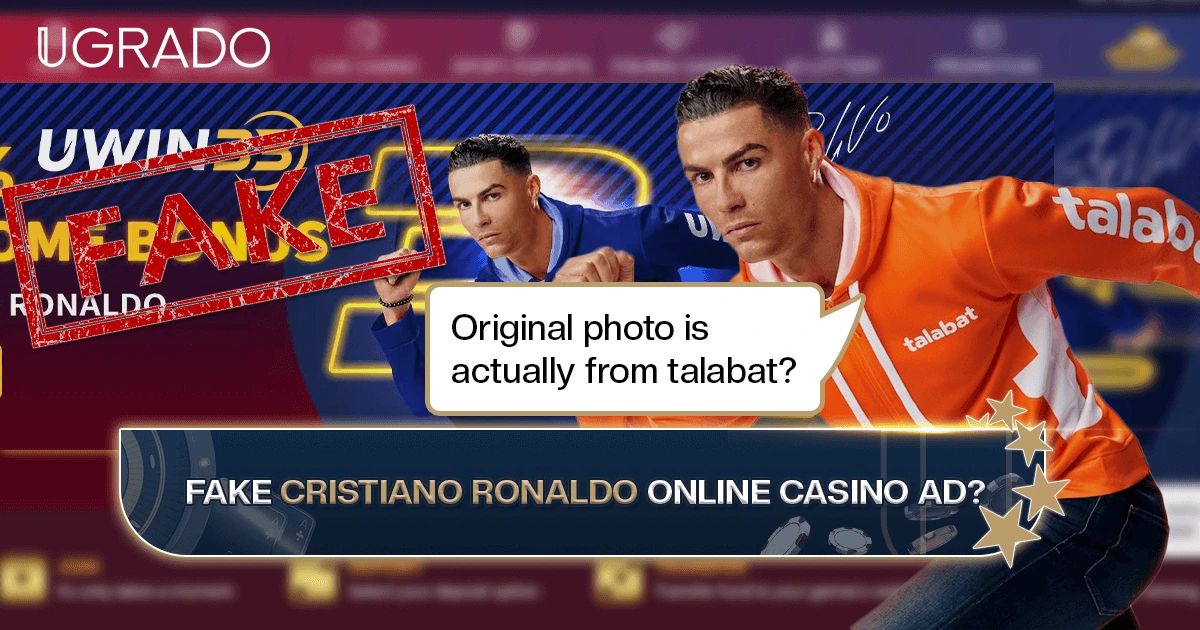
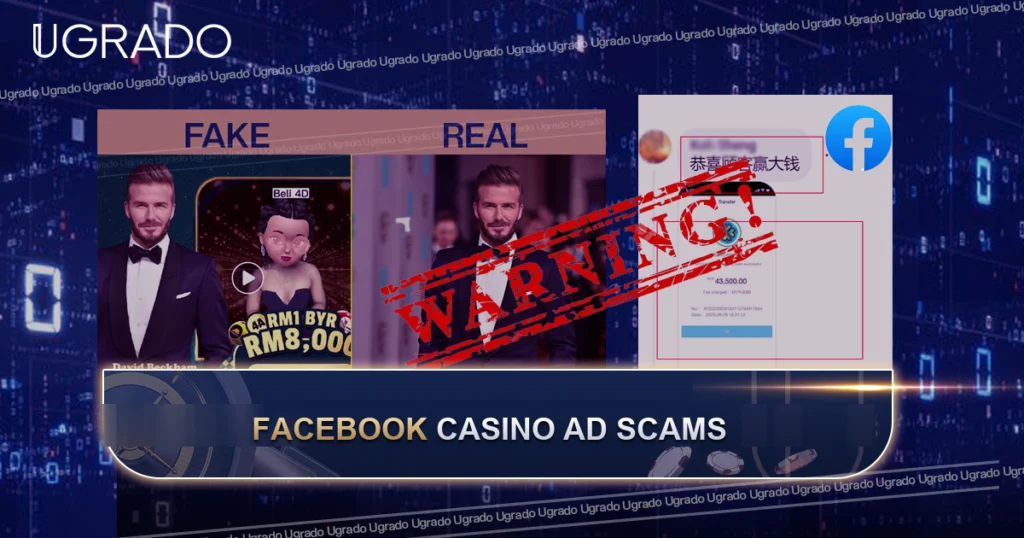
One common trick is to use the reputation of celebrities without their knowledge, to make an online casino brand look more credible. These ads often feature celebrities, sports athletes, football players and social media influencers who are likely to appeal to players.

Scammers may edit a celebrity into a promotional video for online gambling services, or photoshop celebrity photos into the ad. AI editing tools are making these fake ads harder to spot.
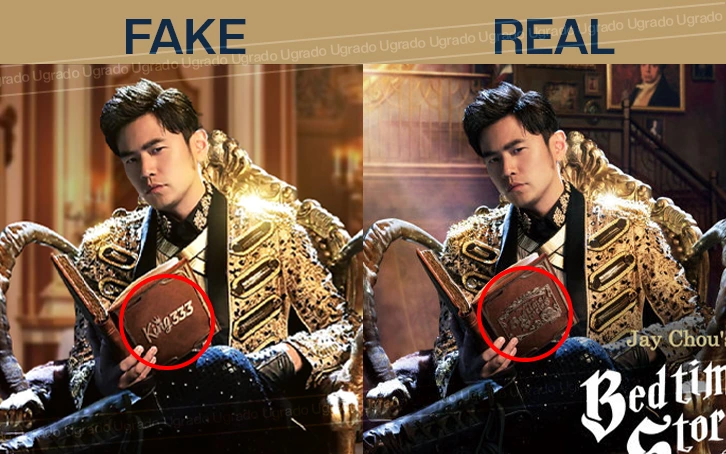
Ugrado articles on ads that misused celebrity images:
- Enjoy 11 ad that used the image of Dwayne Johnson
- Uwin33 ad that used the image of Cristiano Ronaldo
- AGBet ad that used the image of David Beckham
- King333 ad that used the image of Jay Chou
2. Misleading bonus ad
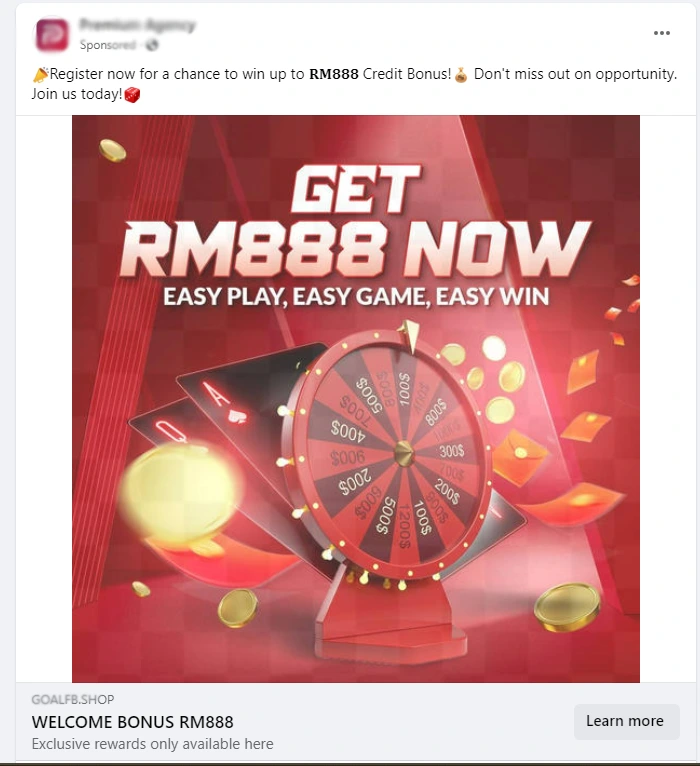
Bonus scams use eye-catching slogans that play on the hope of winning big, fast, without risking your own money. These bonuses often come with hidden terms and conditions that make it nearly impossible to benefit from them. Taglines such as free bet, huge bonus and a deposit with no risk create a false sense of urgency and push users to sign up.

Most online casinos offer some type of bonus to attract players, and scammers take advantage of this by creating fake offers that seem too good to be true.
3. Unrealistic payout or winning claim ad

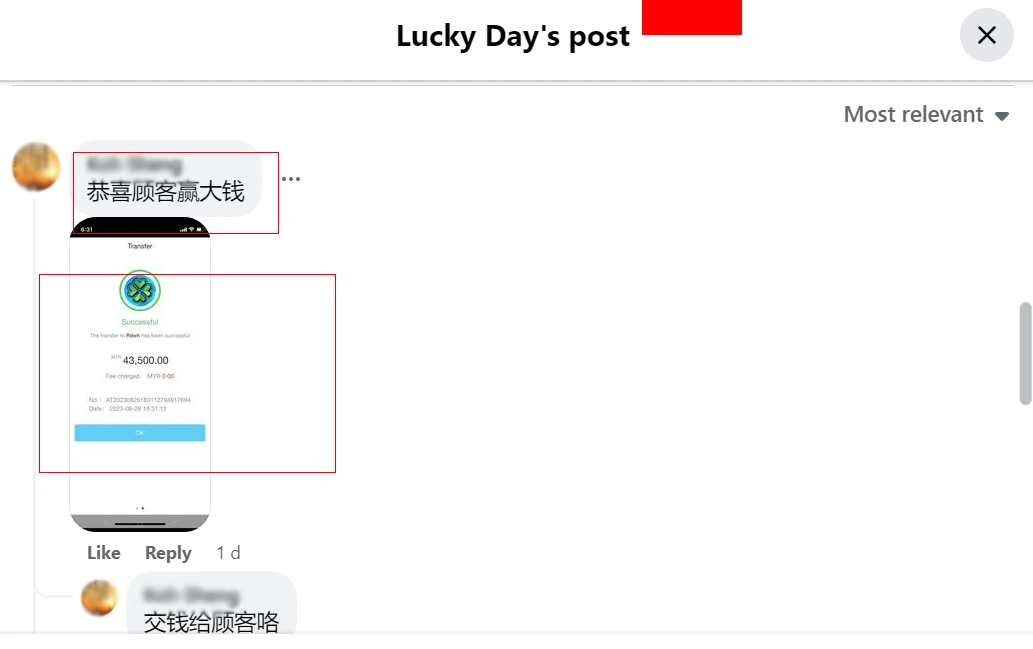
To grab attention, some scammers use exaggerated content such as claims that you will win big for sure, or falsely say that players have won large sums of money. These ads are often posted by fake Facebook accounts acting as affiliates, and they attract players into depositing money in the hope of winning big. Sometimes a link or website leads players to sign up through an affiliate link.
4. Fake links that pretend to be well-known brands
Another common trick is Facebook ads that pretend to come from news sites, government officials or well-known brands, and send users to a suspicious site. Instead of the official site, users land on a spoof site that links on to online casino websites.
5. Fake teaching group ad
Another scam invites users to pay for groups or classes that promise sure wins at online casinos. The ad usually shows pictures of wealth, the profile of a so-called "instructor" and game results to attract users.
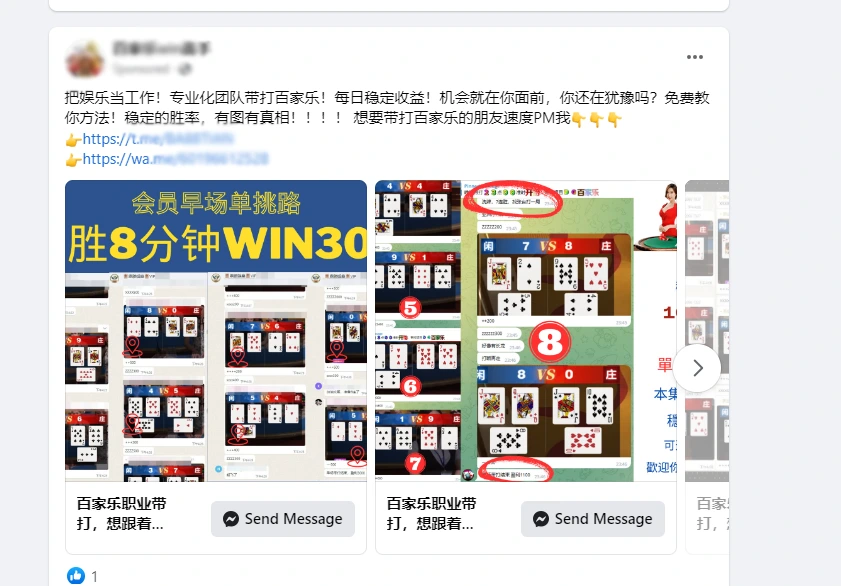

Instead of sending users to a casino website, this scam invites them to join a group to learn how to win money through online casino games. Analysts, instructors and other roles in the group pressure users to put in money on the promise of a sure win.
How Facebook gambling ad campaigns get past review
Meta, the company behind Facebook, requires advertisers to get written permission before they promote online gambling and gaming, does not allow these ads to target people under 18, and restricts them in some countries, including Malaysia and Singapore. Many Facebook users in Malaysia still see gambling ads. The campaigns behind them usually work as follows.
How the ads are set up
Some advertisers create their ads with fake information and run them through inactive Facebook pages, so the ads get through Meta’s checks.
How cloaking hides the real page from review
Others use cloaking: the ad shows one page to Meta’s reviewers and another to real visitors. A reviewer who opens the ad lands on a harmless page, while the people the advertiser wants to reach see the gambling page. Meta’s Advertising Standards do not allow cloaking, because it is built to beat the review process.
How visitors are targeted and where they are sent
Cloaking tools filter out unwanted visits by checking IP addresses and traffic, and use geo-targeting to decide which visitors see which page. Some work across several ad networks. They can also rotate URLs, tag visitors with cookies and protect the landing page, so that it opens only for visitors who come from a source the advertiser allows and cannot be opened directly.
What this means when you see one
An ad that uses cloaking has not been reviewed as a gambling ad, so you cannot assume the page behind it follows Meta’s rules, including the age limit. The page you see may not be the page Meta checked. Treat any gambling ad on Facebook with caution and use the checks below before you deposit.
How to spot and avoid online casino scams
Do your research
Before you sign up anywhere, search the site’s name with words such as "scam" or "complaint" and read what other players report. If you have a bad experience, share it on review platforms and forums to help others avoid suspicious ads.
Check if the casino has a licence
It is important to ensure the online casino platform you choose is licensed from a legitimate regulatory body. You can find the information like the licence code and logo at the footer of the online casino website.
Read the terms and conditions
Read the terms and conditions in full before you put in real money, especially the rules on bonuses and payouts. Be wary of any offer whose terms are vague or hard to find.
Look at the website address
The padlock and https only mean the connection is encrypted. Scam sites can have them too, so treat them as a minimum, not as proof that a site is genuine. Read the full address carefully for spelling changes.
Check the contact details
Check the contact details the site lists and whether anyone answers. Contact options on their own do not prove a site is genuine.
What to do if you see a fake ad
If you come across one of these ads, take these steps:
- Do not click the link, send money or share personal details.
- Take screenshots of the ad and of any page it already opened, because a cloaked landing page may not open again from a direct link.
- Report the ad on Facebook using the menu on the ad.
- If you have already paid, contact your bank and keep screenshots and receipts.
- If gambling is causing you stress or losses, see responsible gaming.
Stay alert before you click
The internet is full of fraudulent advertising and scam tricks that turn players into victims. If you know these common scams and misleading ads, you are less likely to fall for them. Nothing is more important than protecting your money and personal details.

 Top Bonus Pick