


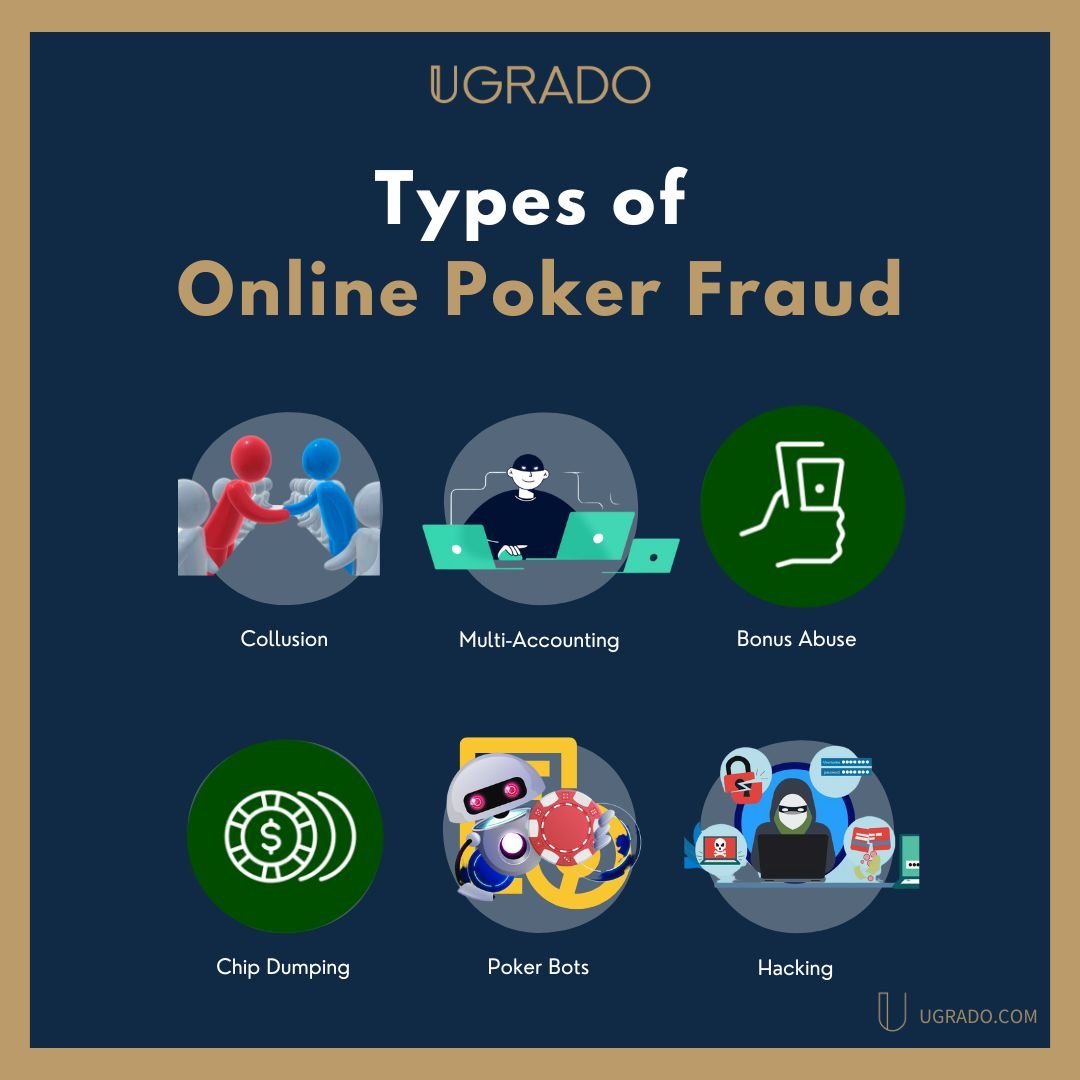
Online poker fraud includes collusion, multi-accounting, bonus abuse, chip dumping, poker bots and account hacking. You can lower the risk by choosing reputable sites, protecting your account and learning how these schemes work. This guide explains each type of fraud and what players and poker platforms can do about it.
Common Types of Online Poker Fraud
As online poker has grown, it has attracted fraud, so players need to know the risks. These are the most common types.
Collusion
Collusion happens when two or more players work together at one table to gain an unfair advantage over the others. They share card information, coordinate their bets and steer the result of a hand with gestures or messages, in order to take money from the other players.
Multi-Accounting
Multi-accounting means one person using several accounts at the same time to gain an unfair advantage. For example, the person can use extra accounts to target weaker players or to build up chips, in order to increase winnings.
Bonus Abuse
Bonus abuse is the unethical practice of collecting bonuses and moving them into one account to cash out. Common methods include creating several accounts to claim the same bonus again and again, hunting for bonuses across different platforms, and colluding to meet the bonus requirement.
Chip Dumping
Chip dumping happens when one player deliberately loses chips to another player, usually a partner or a team, to control the result or to move funds around. For example, player A, who has a large stack, plays weakly on purpose (such as folding strong hands) to pass chips to player B. This gives B an unfair advantage over the players who are not part of the scheme.
Poker Bots
Poker bots are programs that analyse game data, pick a strategy and act without a human. Because a bot can play several tables at once without tiredness or emotion and can adjust to the betting habits of its opponents, it can win more often than a human over a long run, which makes it a fairness problem for the whole table.
Account Hacking
Account hacking is one of the most common and dangerous online poker frauds. Hackers who get into a player’s account can gain control of it, steal personal information and login details, make unauthorised transactions and use phishing to reach the player’s financial information.
How Players Can Prevent Online Poker Fraud
Once you know the common types of fraud, the next step is to prevent them, because online poker should be a fun experience. These measures help you avoid unsafe situations.
Research and Choose Reputable Platforms
Always search for online poker sites that are licensed and regulated by valid authorities, good reputation and positive review from third-party testlab or review agency. Reputable platforms usually publish clear security and fair-play rules, so read them. You can compare sites on the Ugrado grade ranking.
Learn the Common Fraud Tricks
Learn to recognise common online poker fraud behaviour and keep up with new techniques. Follow reputable iGaming forums, blogs and review sites, and read how other players describe their experiences.
Be Careful With Third-Party Software
Never open or click unauthorised software that looks suspicious, and be careful with unknown links that ask for your personal login details. Only use software provided by the platform itself. Fake ads are a known problem, so read our guide to fake online casino ads.
Use Strong Passwords and Two-Factor Authentication
Add a layer of security to your poker account with a strong, unique password and two-factor authentication (2FA), which reduces the risk of unauthorised access. A strong password mixes letters, numbers and symbols, is not used on any other site, and should be changed straight away if you think it has been exposed.
How Online Poker Platforms Prevent Fraud
Players are not the only ones who must guard against fraud. A poker platform also needs extra layers of security to keep out scammers and keep the games fair for everyone.
Player Identification
A secure platform checks every new player, for example by comparing the IP address and device against its database. An account can be flagged for review if two or more players use the same device or IP address.
Password Strength Requirements
A platform should also require strong passwords, with a minimum length, small and capital letters and special symbols. This makes it harder for scammers to hack into other players’ accounts.
KYC
With KYC (Know Your Customer) procedures, a platform collects verification documents and confirms each player’s identity. This helps reduce fraud and protect players.
Monitoring Player Behaviour
A platform should regularly review unusual activity, such as playing habits, finances and winning statistics, and investigate signs of multiple accounts, collusion or chip dumping to keep the games fair.
Staying Safe From Online Poker Fraud
Online poker fraud puts players at risk, but knowing the types of fraud and taking the preventive steps above can lower that risk and protect your poker experience. Ugrado lists iGaming sites on its grade ranking. Head here for more iGaming tips and guides, and set your limits first: see responsible gaming.


 Top Bonus Pick