

The same slot can have different RTPs at different casinos because some providers offer more than one mathematical configuration of a title. A percentage on a review page therefore tells you what the game can run at, not necessarily what the casino in front of you is running.
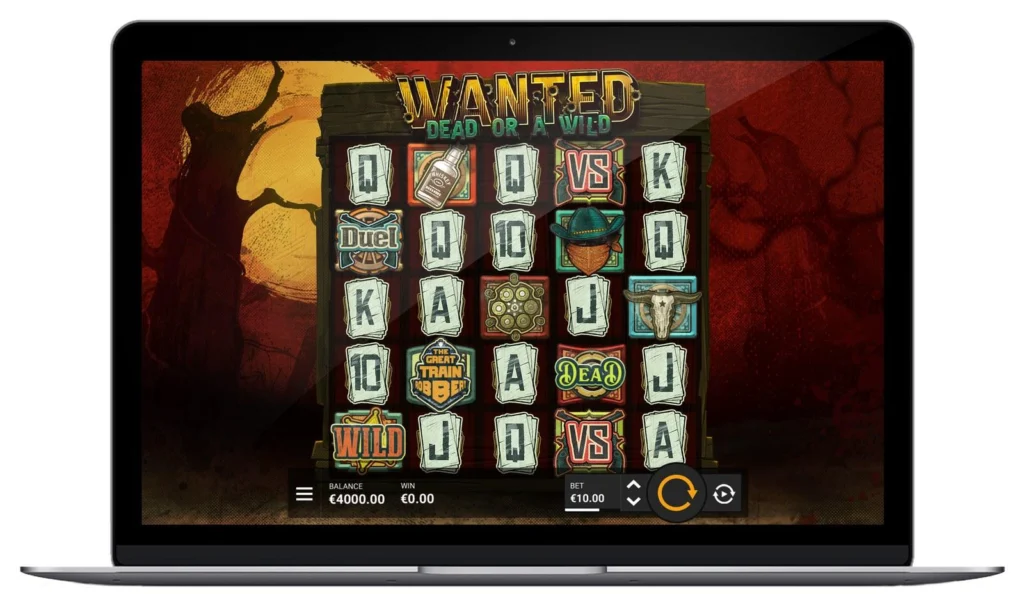
Take Wanted Dead or a Wild. Hacksaw Gaming lists four RTP figures for it: 96.38%, 94.55%, 92.33% and 88.42%. Over $1,000 wagered, the top setting has an expected return of $963.80 and the lowest $884.20, a gap of $79.60 on the same reels and the same features. Seeing 96.38% on a comparison website doesn’t tell you which of those four a particular platform uses.
This guide focuses on checking the version: what provider data can confirm, which figures to compare, and what to do when the active RTP is unclear. For the basics of how RTP works, read our guide to RTP and volatility in slots.
Why Can the Same Slot Have Different RTPs?
A provider may certify a title in several RTP configurations. The casino, or the platform it runs on, chooses which one to deploy, within the limits of the provider’s offer and any market rules.
Versions can share the same title, artwork and features, but looking the same doesn’t mean the maths is the same. A different RTP means a different theoretical return over the long run, even if every spin looks familiar.
This is not the same as a casino changing results based on your recent wins or losses. A published alternative configuration is a fixed, certified version of the game. It doesn’t adjust to you, and it doesn’t change during your session.
Published Examples of Multiple RTP Configurations
The examples below come from provider pages checked on 30 October 2026. They show that multiple configurations exist; they don’t show which version any particular casino uses.
| Game | Provider | RTP information on the provider page |
|---|---|---|
| Wanted Dead or a Wild | Hacksaw Gaming | 96.38%, 94.55%, 92.33%, 88.42% |
| Le Bandit | Hacksaw Gaming | 96.34%, 94.23%, 92.17%, 88.36% |
| Money Train 3 | Relax Gaming | Alternative RTP: 94.00%; German RTP: 90.00% |
A Configuration List Does Not Identify the Active Version
The official Wanted Dead or a Wild game page and Hacksaw’s Le Bandit page each list four RTP percentages in their Game Data sections.
These are useful reference points when you check the game at a casino. But a provider listing four figures doesn’t mean all four are offered at every operator or in every market. You still need to find out which one is being offered to you.
A Market Label Needs to Be Read in Context
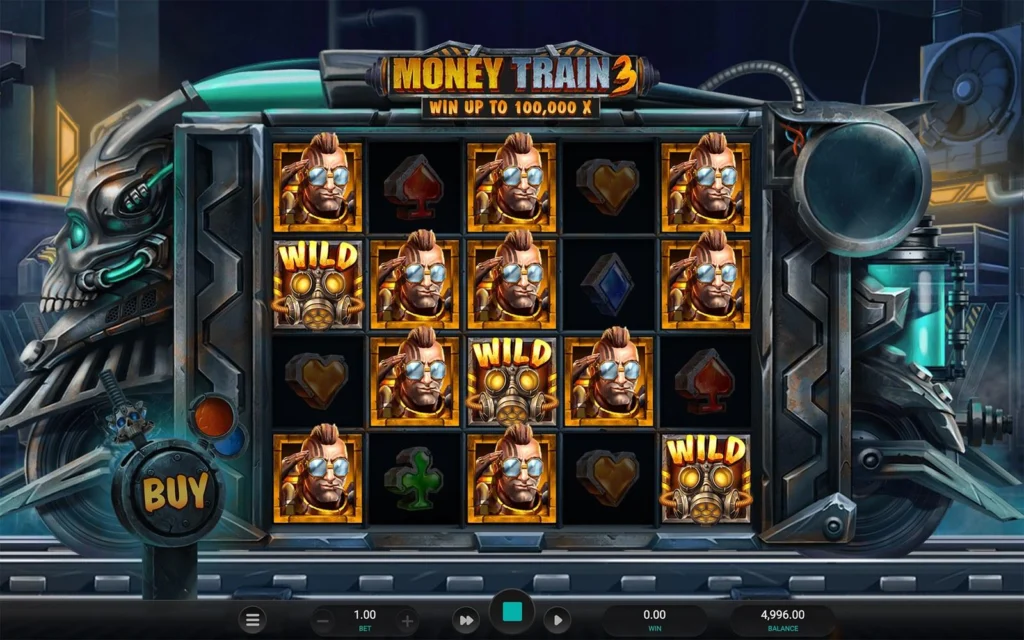
The official Money Train 3 product page labels 94.00% as an alternative RTP and 90.00% as a German RTP.
Those labels describe alternatives rather than one universal percentage, which is why it pays to keep the provider’s exact wording when you note down a figure. The page itself doesn’t say which version a given casino runs.
Three Figures to Match Before Comparing Versions
Two different percentages don’t automatically mean two different casino configurations. First, work out what each number actually describes.
| Figure | What it refers to | What to check |
|---|---|---|
| Published reference RTP | A percentage on a provider page or review | Whether it describes one version or a list of alternatives |
| RTP for the offered version | The configuration available at the casino | The game rules, information screen or a specific answer from the operator |
| Mode-specific RTP | A figure tied to a Bonus Buy, feature option or other mode | Whether you are comparing the same mode on the same basis |
Don’t compare a base-game figure at one casino with a Bonus Buy figure at another and put the gap down to the casino’s configuration. If any of these terms are new, our list of slot terms explains paytables, Bonus Buys and other features.
Also check the full game name. A sequel, Megaways edition or similarly named release is a separate title with its own figures, even when the branding looks familiar.
How to Check the RTP Version at a Casino
1. Identify the Exact Title and Provider
Write down the full title and studio name, including any suffix or edition, such as a sequel number, POP or Megaways.
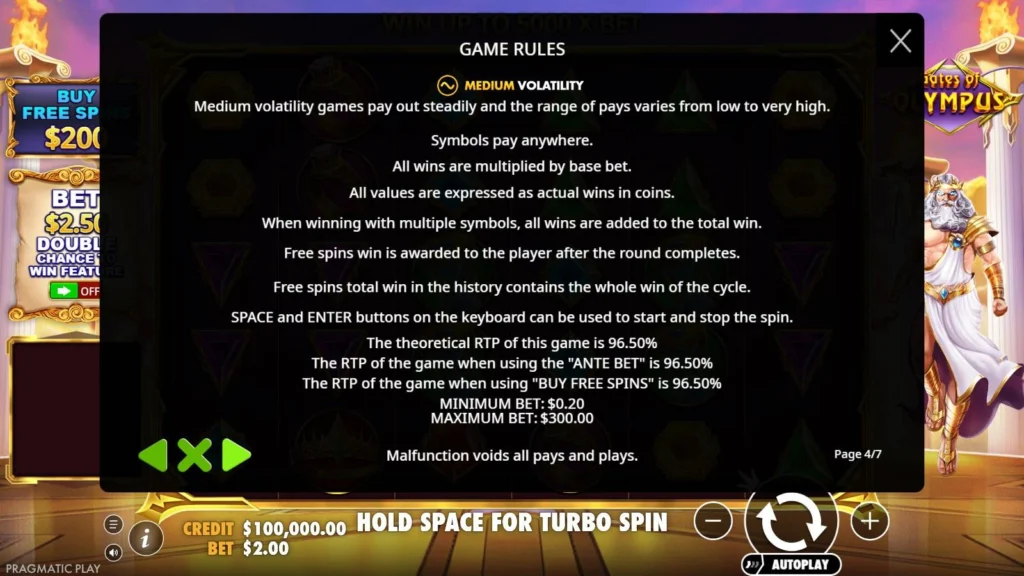
2. Open the Game Information
Look for an Info, Help, Rules or Paytable option inside the game. Common access points are an “i” icon, a question mark or a menu button.
Read this before placing a wager. You don’t need to stake money to see the displayed percentage.
3. Read the Labels Around the RTP
Find “RTP”, “Return to Player” or “theoretical return”, and note the percentage along with any description next to it.
If several figures appear, check whether they are alternative configurations or different game modes. A list of possibilities doesn’t tell you which one is active.
4. Compare Like for Like
Match the exact title, configuration and mode against the provider’s published information. Where the provider publishes only one figure, treat it as a reference point rather than proof that every casino runs that percentage.
If you want to compare games across a catalogue rather than check one game’s version, see our article on Pragmatic Play slots with the highest RTP.
5. Keep a Record of What You Found
A screenshot of the rules, together with the casino name and date, makes it easier to query a discrepancy or ask support a precise question.
| Detail | What to record |
|---|---|
| Casino | Platform name |
| Game | Exact title and provider |
| Mode | Standard play, demo or named feature option |
| RTP | Displayed percentage and its label |
| Evidence | Rules screenshot or written confirmation |
| Date | When you checked |
What If the Active RTP Is Not Clear?
If the rules show several percentages without marking the active one, or show none at all, ask the operator to confirm the configuration for that exact title and mode.
A useful question is: “Which RTP configuration is currently offered for this game in standard play, and where can I see it in the game rules?”
A generic reply such as “our games use the provider’s RTP” doesn’t answer the question when the provider offers several versions. Until you get a specific answer, treat the active configuration as unconfirmed. Don’t fill the gap with a casino-wide average, a review’s headline figure or the results of a short session.
Can the Demo and Casino Version Have Different RTPs?
Yes, they can run different configurations. A provider-hosted demo is a good way to find the information menu and learn the rules, but the RTP it shows applies to that demo, not to the version at another platform.
Check the two separately. Don’t assume a demo always runs the highest setting, or that matching artwork means matching RTPs.
A short run of wins or losses can’t tell you which version you’re on either. Confirmation has to come from the game information, not from session results.
Does a Lower Version Mean the Casino Is Manipulating the Game?
Not on its own. A provider-published alternative is a certified version of the game, which is very different from software being altered without authorisation or outcomes being changed for an individual player.
At the same time, offering a legitimate alternative doesn’t prove that an operator is licensed, transparent or running an authorised build. Those are separate checks.
This guide helps with a narrower question: can you identify the configuration on offer and back that up with information from the game or the operator? Whichever version you play, set a budget before you start. The RTP configuration affects the theoretical expected loss per amount wagered; it does not predict how quickly an individual player will lose money.
Conclusion
A slot’s name, artwork and headline RTP don’t tell you which version every casino runs. Start with the exact title, open the game information, and match the configuration and mode before comparing percentages.
If the active version is still unclear, leave it unconfirmed. A documented figure is worth more than an assumption based on a review, a demo or a recent run of results.
Frequently Asked Questions (FAQs)
Some providers offer several mathematical configurations of a title, and casinos may deploy different ones. Before putting the difference down to the operator, check that both figures describe the same title and the same mode.
Generally not. A game may offer separate modes, such as a Bonus Buy, each with its own stated RTP, but choosing one of those is not the same as changing the version the casino runs.
No. A provider’s published data gives a reference figure or a list of alternatives. It doesn’t tell you which version a particular operator offers.
Read the labels and look for a sign of which configuration is active. The figures may describe alternative builds or different modes. If the rules don’t settle it, ask the operator to confirm.
No. Session results can’t reliably identify the configuration behind a game. Use the game information or a specific answer from the operator.
No. The demo’s figure applies to the demo. Check the information for the casino version separately.

 Top Bonus Pick