


Ever wondered why some slot games offer just 20 paylines while others advertise up to 117,649 ways to win?
The difference comes down to how the game calculates winning combinations. Traditional Payline slots follow predetermined patterns, while Megaways slots use changing reel layouts to create a different number of winning possibilities on every spin.
But does having more ways to win actually improve your chances?
Let’s compare these two popular slot mechanics and explore what they mean for your gameplay, bankroll, and potential payouts.
What Are Paylines in Slot Games?

A payline is a predefined path across the reels where matching symbols must appear to form a winning combination.
Traditional online slot games typically feature 5, 10, 20, or more paylines. Depending on the game, these lines may run horizontally, diagonally, or in zigzag patterns.
For example, in a 20-payline slot, matching symbols must land on an active payline to qualify for a payout, as shown in the game’s paytable.
There are two common types:
- Fixed Paylines: All paylines are automatically active for every spin.
- Adjustable Paylines: Players can select how many paylines to activate, affecting bet coverage and potentially the total wager.
Player perspective: Payline slots are generally easier to understand because the winning patterns remain consistent. Players who prefer straightforward mechanics may find them more comfortable than games with constantly changing reel structures.
However, fewer paylines don’t automatically mean lower volatility or better odds of winning.
What Are Megaways Slots?

Megaways is a dynamic slot mechanic developed by Big Time Gaming (BTG).
Unlike traditional paylines, Megaways games change the number of visible symbols on each reel between spins. This creates a variable number of ways to win rather than relying on fixed payline patterns.
In a typical six-reel Megaways game, each reel can display between two and seven symbols.
The maximum number of winning ways is calculated as:
7 × 7 × 7 × 7 × 7 × 7
= 117,649
Maximum possible ways to win in a standard six-reel Megaways configuration
However, not every spin offers the maximum number of ways to win.
Megaways games often include additional features such as cascading reels, free spins, and multipliers, although the exact features vary by title. Official game rules confirm that matching symbols generally pay across consecutive reels from left to right, regardless of their row position.
Player perspective: Megaways slots offer more variation between spins, which can make gameplay feel unpredictable and exciting. However, the constantly changing reel layouts can also make winning combinations harder to follow, especially for beginners.
Megaways vs Paylines: Key Differences
| Feature | Payline Slots | Megaways Slots |
|---|---|---|
| Winning system | Fixed patterns | Dynamic ways to win |
| Reel layout | Usually fixed | Variable symbol heights |
| Winning paths | Often 5–100+ lines | Up to 117,649 ways in common six-reel games |
| Volatility | Low to high | Frequently high, game-dependent |
| Cascading wins | Game-dependent | Common |
| Gameplay complexity | Usually simpler | More complex |
| Ideal audience | Players who prefer familiar mechanics | Players who enjoy changing layouts and bonus features |
The key distinction is that Paylines determine where symbols must align, while Megaways determines how many symbol combinations can qualify across adjacent reels.
Neither system inherently offers a higher RTP or a better chance of making a profit.
Does Megaways Offer Better Winning Chances Than Paylines?
This is one of the biggest misconceptions among online slot players.
A game advertising 117,649 ways to win might appear more rewarding than one offering only 20 paylines. However, the number of winning paths alone does not determine how often a player wins or how much a game returns.
Three factors deserve more attention:
1. Return to Player (RTP)
RTP represents the theoretical percentage of total wagers a game returns over a very large number of spins.
For example, a slot with 96% RTP theoretically returns RM96 for every RM100 wagered in aggregate over the long term, meaning the remaining RM4 represents the mathematical house advantage.
It does not mean an individual player will receive RM96 back after wagering RM100.
2. Slot Volatility
Volatility describes how unevenly payouts are distributed.
High-volatility slots tend to feature more pronounced swings between results, while low-volatility games typically offer less extreme payout patterns.
Many popular Megaways games use high-volatility models, but this is a design choice rather than an automatic consequence of the Megaways mechanic.
3. Hit Frequency
Hit frequency measures how often a spin pays out. A game can have many winning ways but still deliver relatively infrequent payouts, depending on its mathematical design.
Analyst insight: When comparing Megaways vs traditional slots, RTP, volatility, hit frequency, and bonus mechanics provide more useful information than the advertised number of winning ways.
Popular Megaways and Payline Slot Examples
Understanding real slot games makes the comparison easier.
Bonanza Megaways
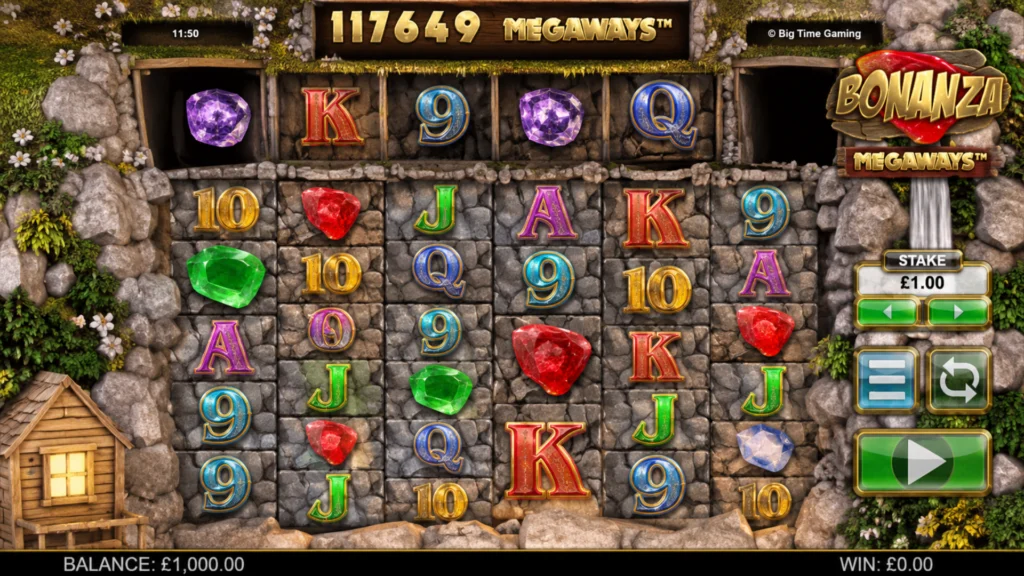
Developer: Big Time Gaming
A classic Megaways example featuring dynamic winning ways and cascading symbols. It illustrates how changing reel layouts can combine with additional features to create varied outcomes.
Book of Dead

Developer: Play’n GO
A traditional five-reel game with up to 10 selectable paylines. Despite its relatively simple winning structure, the game’s official rules classify its volatility as very high.
This comparison highlights an important point: a slot’s winning system does not determine its risk level. Even traditional payline slots can be highly volatile.
Which Is Better: Megaways or Paylines?
From a player’s perspective, the better choice depends on the experience you prefer, not the number of advertised winning combinations.
| Player Preference | Potentially Better Fit |
|---|---|
| Simple winning patterns | Traditional paylines |
| Dynamic reel layouts | Megaways |
| Cascading combinations | Megaways games with cascades |
| Easier payout tracking | Traditional paylines |
| Lower volatility | Compare individual games, not systems |
| Higher RTP | Check each game’s actual RTP |
Analyst’s View: Why Bigger Numbers Can Be Misleading
One overlooked aspect of Megaways marketing is how the enormous number of ways to win influences player expectations.
Seeing 117,649 ways to win can make a game appear significantly more generous than a 20-payline slot. Yet those figures describe the possible winning paths, not the probability of receiving a payout.
There are two additional considerations worth highlighting:
- Small wins are not necessarily profitable wins. A spin that returns less than the original wager is still a net loss, even if the game celebrates it with animations.
- Complex mechanics can obscure the actual result. Cascades, multipliers, and changing reel heights may make Megaways games feel more rewarding, but the player’s net outcome matters more than the visual excitement.
My assessment is that players should evaluate a slot using its actual payout characteristics rather than treating its advertised number of winning ways as an indicator of value.
Final Verdict: Megaways vs Paylines
The biggest difference between Megaways and Paylines is how each system identifies winning combinations.
Traditional paylines offer fixed winning patterns, while Megaways introduces dynamically changing winning ways and often combines them with additional features.
However, more winning ways don’t automatically mean better odds or higher returns.
Before choosing an online slot game, compare its RTP, volatility, hit frequency, bonus features, and betting requirements. These factors are more meaningful than the number of paylines or winning ways displayed.
Ultimately, the better slot system is the one whose mechanics you understand and whose risk characteristics suit your preferences, not the one promising the most winning possibilities.
Responsible gaming reminder: Slot outcomes are random, and no winning system guarantees a profit. Only play where legally permitted, set a spending limit, and never chase losses.
Frequently Asked Questions
Not necessarily. Megaways offers dynamic winning combinations and often more elaborate gameplay features, while traditional paylines provide predictable winning patterns. Neither system guarantees better returns.
No. RTP depends on the individual game’s mathematical design and configuration, not whether it uses Megaways or fixed paylines.
Many popular Megaways slots have high volatility, but this is not a universal rule. Traditional payline slots can also be highly volatile.
Yes. However, beginners may find traditional payline slots easier to understand. Trying a free demo, where available, can help players learn the mechanics without wagering real money.
Activating additional paylines in an adjustable-payline game can increase the number of combinations eligible for payouts. However, it may also increase the total wager and does not automatically improve RTP or profitability.

 Top Bonus Pick