

Unlike traditional slot games with fixed top prizes, progressive jackpot slots feature prize pools that increase as eligible wagers contribute to the jackpot. The prize continues to grow until a qualifying player wins it, then resets to a predetermined starting amount.
But how do progressive slots work, and how do they differ from regular slot games?
This guide explains what a progressive slot is, how jackpot pools are funded, the differences between local and networked jackpots, and how Return to Player (RTP) affects the game’s theoretical payouts. It also examines six well-known progressive jackpot slots and their key features.
What Is a Progressive Slot and How Does It Work?
A progressive slot is a slot game featuring a jackpot that grows over time as a percentage of eligible wagers is added to a shared prize pool.
Unlike a fixed jackpot, which offers a predetermined prize, a progressive jackpot continues increasing until it is triggered.
Here’s how the process typically works:
- Players place wagers: A percentage of each eligible wager contributes to the progressive jackpot pool.
- The jackpot increases: As more qualifying wagers are placed, the accumulated prize grows.
- A player triggers the jackpot: Depending on the game, the jackpot may be awarded through specific symbol combinations, bonus features, or random triggers.
- The jackpot resets: After a successful payout, the prize pool returns to its predetermined starting amount, known as the seed value.
The seed amount is generally provided through the jackpot system or its operator. For example, Mega Moolah features four progressive jackpot tiers: Mini, Minor, Major, and Mega.
Importantly, progressive jackpots operate using random outcomes. A growing jackpot doesn’t mean a win is approaching, and previous spins don’t determine the outcome of future independent spins.
Types of Progressive Jackpot Slots: Local, Networked and Wide-Area
Not all progressive jackpot slots operate in the same way. Their prize pools differ depending on how many games, casino platforms, or players contribute to the accumulated jackpot.
1. Local Progressive Jackpots
A local progressive jackpot is generally linked to a single gaming machine, casino or designated group of games within a particular casino environment.
Because fewer wagers typically contribute to the jackpot, its prize pool may grow more slowly than that of a larger networked progressive.
One example is NetEnt’s Divine Fortune, which features a local Mega Jackpot alongside two fixed jackpot prizes.
However, smaller jackpots do not automatically mean higher winning probabilities. The actual odds depend on the game’s mathematical design and jackpot mechanics.
2. Networked Progressive Jackpots
Networked progressive jackpots combine eligible wager contributions from multiple participating casinos or games into a connected jackpot system.
Because more players can contribute to the same pool, these jackpots can reach much higher amounts.
Well-known examples include:
- Mega Moolah by Games Global
- Mega Fortune by NetEnt
- Wheel of Wishes, featuring Games Global’s WowPot jackpot
Networked jackpots can offer substantial potential prizes, but their jackpot triggers remain subject to the game’s rules and probability model.
3. Wide-Area Progressive Jackpots
A wide-area progressive jackpot connects multiple participating gaming machines, games or casino locations to a shared jackpot network.
In online gaming, this structure may include different titles within the same progressive jackpot series.
Playtech’s Age of the Gods series is an example of a linked jackpot system, where participating games share four progressive jackpot tiers.
Although these arrangements can produce larger prize pools, they do not guarantee more frequent payouts.
What Are Must-Drop and Daily Progressive Jackpots?
A must-drop jackpot is a progressive jackpot designed to be awarded before a predetermined deadline or prize threshold.
Unlike conventional progressive jackpots, which may continue growing until a random qualifying trigger occurs, must-drop systems include specific payout limits.
Two common formats are:
- Time-based must-drop jackpots: The jackpot must be awarded before a specified time, such as the end of an hour or day.
- Value-based must-drop jackpots: The jackpot must be awarded before its accumulated value reaches a predetermined maximum.
For example, Red Tiger introduced its Daily Drop Jackpots in April 2019, followed by hourly jackpot formats later that year.
These systems ensure that a qualifying payout occurs within the designated conditions. However, the payout deadline does not guarantee that any particular player will win.
The jackpot is awarded according to the game’s rules, and players should not assume that an approaching deadline improves their individual chances unless the game’s published mechanics explicitly support that conclusion.
How Does RTP Work in Progressive Jackpot Slots?
Return to Player (RTP) is the theoretical percentage of total wagers that a slot game is designed to return to players over a very large number of spins.
For progressive jackpot slots, the advertised RTP may include both regular gameplay returns and a separate progressive jackpot component.
This distinction matters because the overall RTP does not necessarily reflect the theoretical return of the base game alone.
Mega Fortune RTP Example
NetEnt’s Mega Fortune has a published default RTP of 96.60%.
According to commonly reported RTP breakdowns, approximately 7.6 percentage points are associated with the progressive jackpot component.
This leaves approximately 89% attributed to the remaining game features under that configuration.
However, these figures represent theoretical long-term returns, not guaranteed results during individual gaming sessions.
Mega Moolah RTP Example
Mega Moolah provides another useful example of how progressive jackpot contributions affect RTP.
| RTP component | Percentage |
|---|---|
| Base game RTP | 88.12% |
| Progressive jackpot contribution | 5.30% |
| Combined theoretical RTP | 93.42% |
The game’s base RTP is 88.12%, with an additional 5.30 percentage points allocated to its progressive jackpot component.
This produces a combined theoretical RTP of 93.42%.
Players who do not receive progressive jackpot payouts will not benefit directly from that component during their sessions. Nevertheless, RTP is a statistical average, not a prediction of individual winnings or losses.
Game providers may also offer different RTP configurations. Always check the information panel of the specific game version before playing.
For a more detailed explanation, refer to our guide on RTP and volatility in slot games.
Do You Need to Bet the Maximum to Win a Progressive Jackpot?
Not necessarily. The minimum stake required to qualify for a progressive jackpot depends on the game’s rules.
Some progressive jackpot slots require players to place the maximum permitted wager before becoming eligible for the top prize.
For example, Playtech’s Jackpot Giant requires a qualifying five-Wild-symbol combination on the first payline at the maximum bet to award its progressive jackpot.
Other games allow qualifying jackpot triggers at lower stakes.
Mega Moolah, for instance, has awarded progressive prizes from relatively small wagers. Its Guinness World Records-listed jackpot in October 2015 was won by a player wagering just £0.25 per spin.
However, eligibility at a lower stake does not necessarily mean that all stake levels have identical jackpot probabilities.
Before playing, check:
- The minimum qualifying wager
- Whether the maximum bet is required
- Whether wager size affects jackpot probability
- The specific symbols or bonus features required to trigger the jackpot
Increasing your stake does not guarantee a jackpot win. Assess any differences in jackpot eligibility or probability using the game’s official rules.
Six Progressive Jackpot Slots and Their Key Features
Several established online slot games demonstrate how progressive jackpot systems differ in prize structure, RTP, and triggering mechanisms.
The following examples highlight six progressive jackpot slots and their commonly published specifications. RTP figures and game availability may vary by configuration, operator, and jurisdiction.
1. Mega Moolah (Games Global)
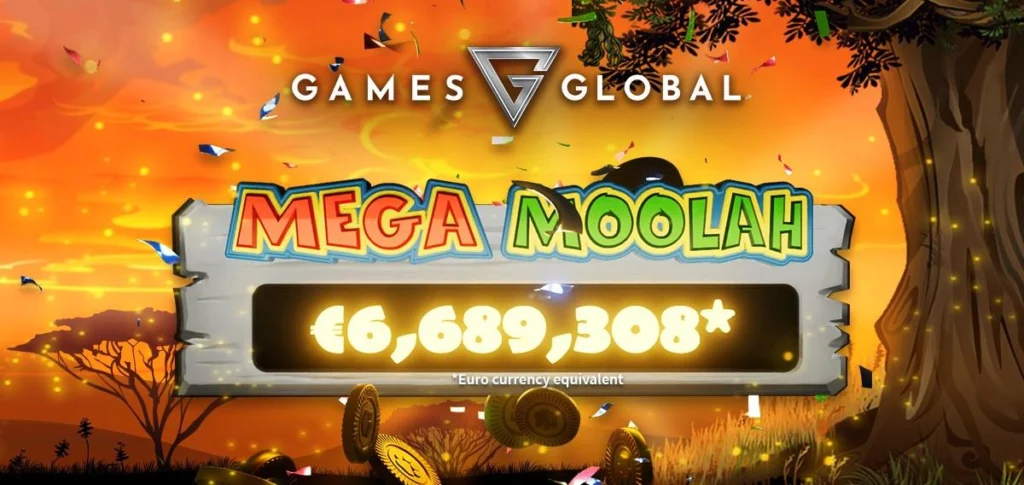
Mega Moolah is one of the best-known networked progressive jackpot slots. Originally developed by Microgaming and now part of the Games Global portfolio, the game launched in 2006.
Key Features
- Provider: Games Global (originally Microgaming)
- Release year: 2006
- Layout: 5 reels, 3 rows and 25 paylines
- Published RTP: 93.42% combined theoretical RTP
- Base game RTP: 88.12%
- Progressive jackpot contribution: 5.30%
- Jackpot type: Networked progressive jackpot
- Jackpot tiers: Mini, Minor, Major and Mega
- Jackpot trigger: Random jackpot bonus wheel
Mega Moolah’s progressive jackpot system is its defining feature. The Mega Jackpot has a substantial starting seed and has produced several widely reported online slot payouts.
The game is also known for its relatively low base-game RTP compared with many non-progressive slots.
Players should consider both the standard gameplay return and the jackpot contribution rather than evaluating the game solely by its potential top prize.
2. Mega Fortune (NetEnt)

Mega Fortune is a progressive jackpot slot developed by NetEnt and released in January 2009.
It combines traditional five-reel gameplay with a three-tier progressive jackpot feature.
Key Features
- Provider: NetEnt
- Release year: 2009
- Layout: 5 reels, 3 rows and 25 paylines
- Published RTP: 96.60% (default version)
- Jackpot type: Multi-tier progressive jackpot system
- Jackpot tiers: Rapid, Major and Mega
- Jackpot trigger: Bonus Wheel feature
The progressive jackpot feature is activated when the required Bonus Wheel symbols appear on a qualifying payline.
Players then enter a three-stage bonus wheel, which offers chances to win different jackpot prizes.
The Mega Jackpot is the largest of the three tiers.
NetEnt reported a Mega Fortune jackpot payout of approximately €17.8 million in January 2013, demonstrating the significant prize amounts that connected progressive systems can accumulate.
3. Divine Fortune (NetEnt)
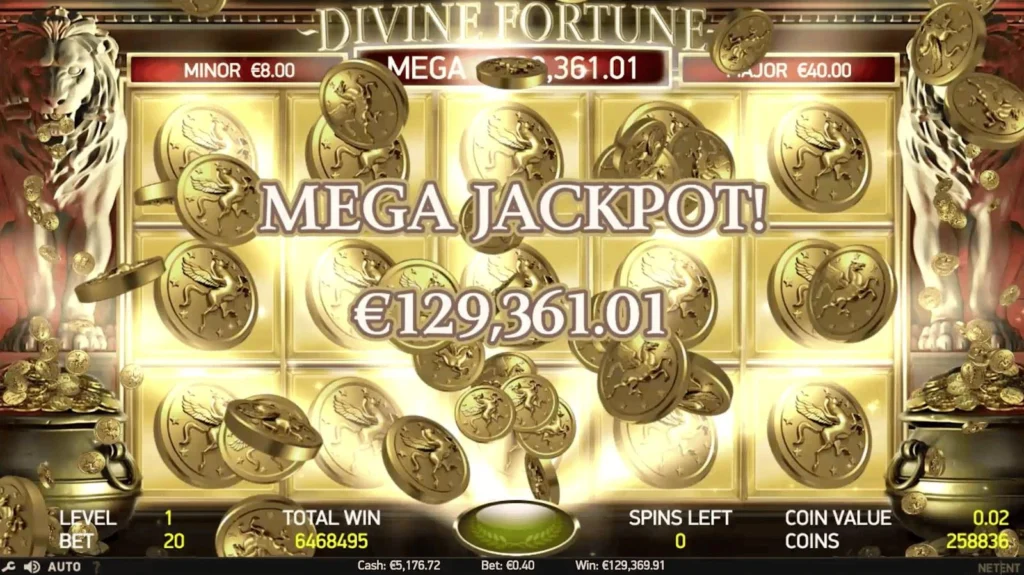
Divine Fortune is a mythology-themed slot released by NetEnt in January 2017.
Unlike some networked progressive games, Divine Fortune features a local progressive Mega Jackpot alongside two fixed jackpot tiers.
Key Features
- Provider: NetEnt
- Release year: 2017
- Layout: 5 reels, 3 rows and 20 fixed paylines
- Published RTP: 96.59% (default version)
- Jackpot type: Local progressive Mega Jackpot
- Additional prizes: Minor (20× bet) and Major (100× bet)
- Jackpot trigger: Jackpot Bonus feature
The jackpot feature involves collecting Gold Coins to fill rows during the bonus round.
Completing one, two, or three rows awards the corresponding Minor, Major or Mega prize.
Divine Fortune also includes Falling Wild Re-Spins and Wild on Wild features, adding gameplay variety beyond its progressive jackpot.
These features make it a slot that combines conventional gameplay mechanics with a progressive prize.
4. Jackpot Giant (Playtech)
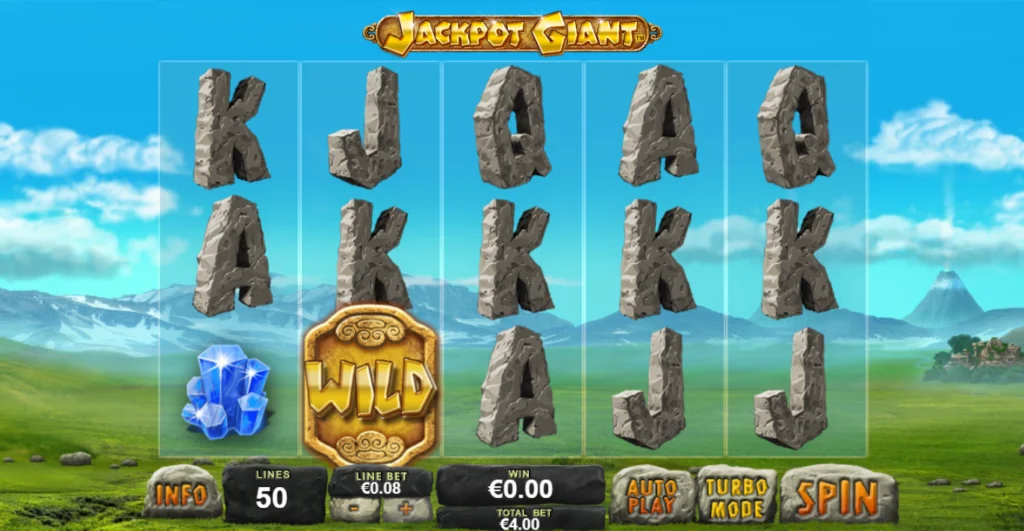
Jackpot Giant is a Playtech progressive slot known for its maximum-bet jackpot requirement.
Unlike randomly triggered progressive games, its jackpot is linked to a specific symbol combination and qualifying stake.
Key Features
- Provider: Playtech
- Layout: 5 reels, 3 rows and 50 fixed paylines
- Published RTP: Commonly reported at 94.22%
- Jackpot type: Single progressive jackpot
- Jackpot trigger: Five Wild symbols on the first payline at the maximum bet
The progressive jackpot is awarded when the required Wild symbol combination appears on the first payline with the maximum qualifying wager.
At lower stakes, the same combination may award a fixed payout rather than the progressive jackpot.
This distinction highlights why checking jackpot eligibility requirements is essential.
Players should confirm the applicable paytable and wagering conditions before participating.
5. Wheel of Wishes (Alchemy Gaming for Games Global)

Alchemy Gaming, a Games Global studio, developed Wheel of Wishes, which launched in 2020.
The game is connected to the WowPot progressive jackpot network, which features four prize tiers.
Key Features
- Provider: Alchemy Gaming, part of Games Global
- Release year: 2020
- Layout: 5 reels and 10 paylines
- Published RTP: Commonly listed at 93.34%
- Jackpot type: Networked WowPot progressive jackpot
- Jackpot tiers: Mini, Minor, Major, and WowPot
- Jackpot trigger: Wheel of Wishes feature during Power Spins
The largest WowPot tier has a starting seed of €2 million.
On December 20, 2023, Wheel of Wishes awarded a jackpot reported by Games Global at €38,461,200.95.
Games Global announced the payout on January 4, 2024, calling it the largest online slot jackpot awarded at the time.
This demonstrates the scale that a networked progressive jackpot can reach, although such exceptional payouts do not indicate the probability of future wins.
6. Age of the Gods (Playtech)

Age of the Gods is a progressive jackpot series developed by Playtech, originally launched in 2016.
The series features Greek mythology-themed games linked through a shared progressive jackpot system.
Key Features
- Provider: Playtech
- Original series launch: 2016
- Original game’s layout: 5 reels, 3 rows, and 20 paylines
- Published RTP: Commonly listed at 95.02% for the original game
- Jackpot type: Linked, multi-game progressive jackpot
- Jackpot tiers: Power, Extra Power, Super Power and Ultimate Power
- Jackpot trigger: Random mystery jackpot feature
Participating Age of the Gods titles share a four-tier progressive jackpot structure.
The mystery jackpot may be triggered independently of standard winning combinations, depending on the specific game.
Since the series includes multiple titles, gameplay features and RTP percentages are not necessarily identical across all versions.
Players should review the rules and RTP information for the individual Age of the Gods game they are considering.
Which Progressive Jackpot Slot Should You Choose?
No single progressive jackpot slot suits every player.
The main differences involve jackpot structure, regular gameplay features, RTP and eligibility requirements.
| Player consideration | Relevant game examples |
|---|---|
| Large networked jackpot pools | Mega Moolah, Wheel of Wishes |
| Higher published overall RTP among the games discussed | Mega Fortune, Divine Fortune |
| Local progressive jackpot | Divine Fortune |
| Multiple linked jackpot games | Age of the Gods |
| Maximum-bet eligibility rules | Jackpot Giant |
| Time-limited progressive payouts | Daily or hourly must-drop jackpot games |
When comparing progressive jackpot slots, consider the following factors:
1. Return to Player (RTP)
Review both the advertised RTP and any available breakdown of the progressive jackpot contribution.
2. Jackpot eligibility
Confirm whether your preferred stake qualifies for the jackpot. Some games require maximum wagers or impose additional conditions.
3. Jackpot triggering mechanism
Understand whether the jackpot is triggered randomly, through a bonus feature or by a specific winning combination.
4. Jackpot structure
Check whether the game features a local, networked or must-drop jackpot. These structures affect how prize pools accumulate and how payouts are determined.
5. Budget and risk
Progressive jackpots can involve substantial prize amounts, but winning is never guaranteed. Set a spending limit and avoid increasing wagers solely because a jackpot has grown.
For additional guidance on managing gaming sessions, visit Ugrado’s Responsible Gaming page.
Conclusion: Understanding Progressive Jackpot Slots
A progressive slot is a slot game featuring a jackpot that grows as eligible wagers contribute to a prize pool. Depending on the game, the jackpot may be local, networked, linked across multiple titles, or subject to must-drop conditions.
Although progressive jackpots can accumulate substantial prizes, their winning mechanisms differ between games.
When comparing progressive jackpot slots, understand the game’s RTP, jackpot contribution, qualifying wager, and triggering conditions.
Most importantly, remember that a larger jackpot does not guarantee a higher chance of winning. Always review the official game rules and treat slot gaming as entertainment, not a source of income.
Frequently Asked Questions (FAQs)
What is a progressive slot in simple terms?
A progressive slot is a slot game with a jackpot that increases as a portion of eligible wagers contributes to the prize pool. Once a qualifying player wins the jackpot, the prize resets to a predetermined starting amount.
What is the difference between a local and a networked progressive jackpot?
A local progressive jackpot collects contributions from a limited gaming environment, such as a particular casino or group of games. A networked progressive jackpot connects multiple participating casinos or games to a shared prize pool. Networked jackpots can accumulate larger amounts because they receive contributions from a broader player base.
Do I have to bet the maximum to win a progressive jackpot?
Not always. Some games, such as Jackpot Giant, require the maximum qualifying wager to award the progressive jackpot. Others, including Mega Moolah, allow jackpot eligibility at lower stakes. Always check the individual game’s paytable and jackpot conditions.
Why is the RTP on progressive slots lower than on regular slots?
Some progressive slot games allocate part of their theoretical return to progressive jackpots. For example, Mega Moolah has an 88.12% base-game RTP and an additional 5.30 percentage-point jackpot contribution, producing a combined theoretical RTP of 93.42%. However, RTP varies by game, and not all progressive slots have lower overall RTPs than regular slots.
What is the biggest progressive slot jackpot ever won?
One of the largest publicly reported online progressive slot jackpots was the €38,461,200.95 WowPot prize awarded through Wheel of Wishes on December 20, 2023.
Games Global announced this payout in January 2024.
Separately, Guinness World Records lists a €17,879,645 Mega Moolah jackpot won on October 6, 2015. The difference reflects the distinction between provider-reported jackpot records and the specific record Guinness World Records currently displays.
Are progressive jackpots guaranteed to pay out?
Not all progressive jackpots have predetermined payout deadlines. Conventional progressive jackpots generally continue accumulating until a qualifying trigger occurs. Must-drop jackpots, however, are designed to award their prizes before specified time or value thresholds are reached.
Does a higher bet increase your chances of winning a progressive jackpot?
It depends on the game’s rules. Some progressive slots apply stake-dependent jackpot probabilities, while others have different eligibility requirements. A higher wager does not automatically guarantee better jackpot odds or a payout.
Can you win a progressive jackpot on a small bet?
Yes, some progressive slot games let players qualify for jackpots with relatively small wagers. For example, the Guinness World Records-listed Mega Moolah jackpot from October 2015 was won using a £0.25 wager. Eligibility depends on the individual game’s rules.

 Top Bonus Pick